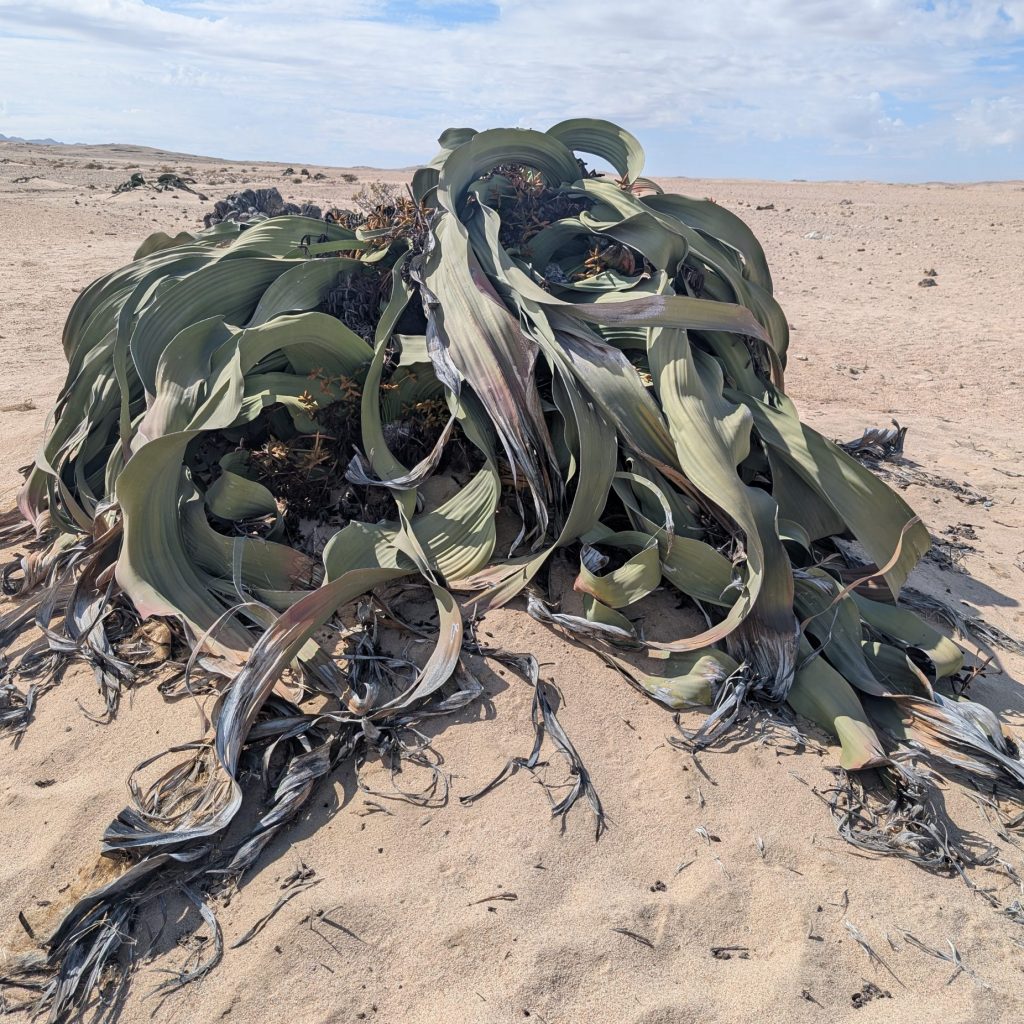
The Heyduk lab’s research focuses on understanding how plants have adapted to challenging conditions, like drought, heat, and nutrient limitation. We study these plant adaptations through the lens of photosynthesis, which is critical not only to plant survival, but to the success of entire ecosystems. Our research spans plant ecophysiology, genomics, and evolutionary biology to understand how plant photosynthesis evolves, is regulated, and how it responds to the environment. Much of our work focuses on carbon concentrating mechanisms (CCMs) like Crassulacean acid metabolism (CAM) – a pathway that mitigates photorespiratory stress in vascular plants. CAM has evolved at least 60 independent times in plants and is found in plants in varying degrees, from low levels of CAM to plants that use CAM nearly exclusively. The diversity of CAM lineages and phenotypes leads to numerous avenues of research on whether CAM evolves the same way each time, how it does so from a C3 ancestor, and how the CAM pathway responds to environmental cues and simultaneously affects other metabolic pathways in plants.
Nitrogen limitation and CAM photosynthesis
Nitrogen is a key nutrient for plants, supplying the important building block of amino acids for plant protein synthesis. Rubisco is one of the most abundant proteins in plant leaves and is a large sink for nitrogen (about 30% of all plant nitrogen is found in Rubisco). When Rubisco undergoes oxygenation instead of carboxylation, no net CO2 is fixed into sugars, and the overall photosynthetic nitrogen use efficiency of plants decreases. CCMs could mitigate nitrogen stress by reducing photorespiration, and thus increasing the proportion of nitrogen that is used by Rubisco to fix CO2.
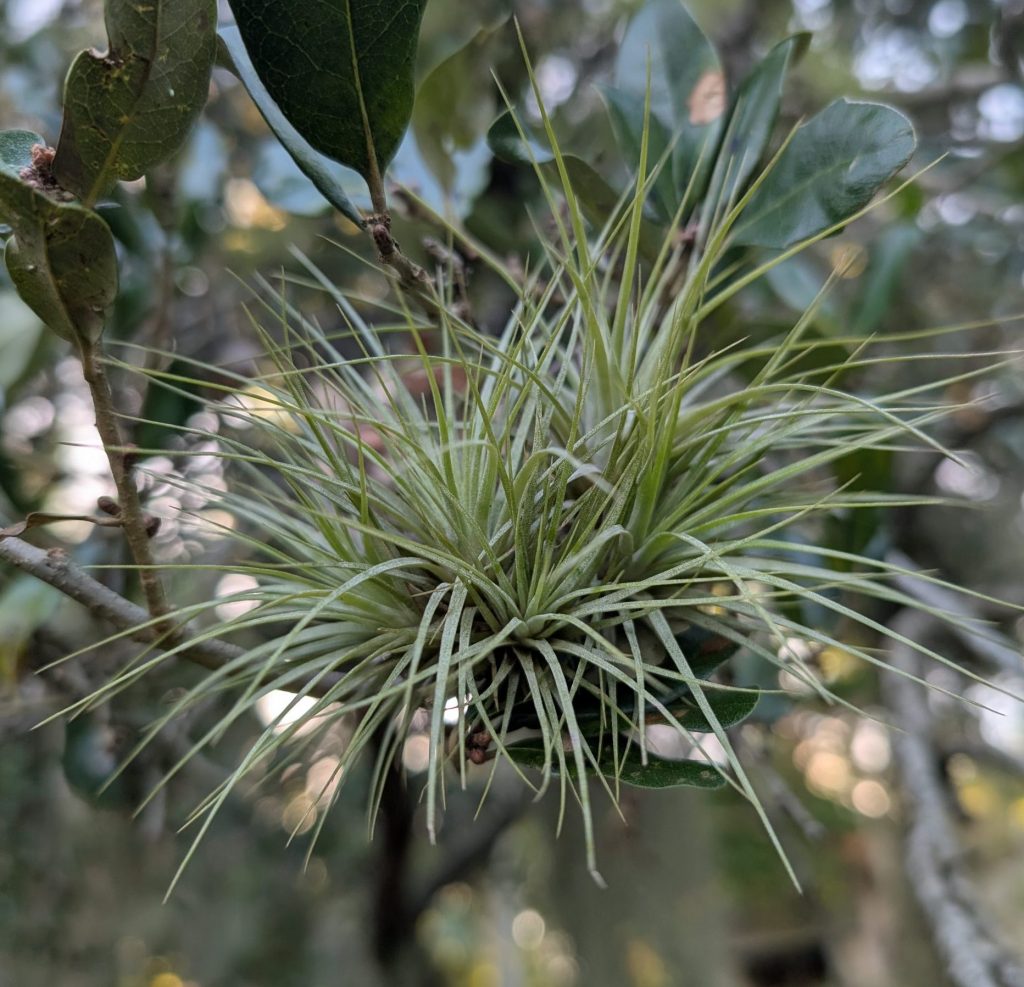
The family Bromeliaceae is no stranger to nitrogen limitations; species in this family have evolved many strategies for nitrogen acquisition as epiphytic plants without ready access to nitrogen in the soil, including specialized trichomes and tanks that can collect debris. Many species in the family use some degree of CAM photosynthesis, making this an ideal plant family to study the interactions between CAM physiology and nitrogen use.
As part of a broader collaborative project, our goal is to understand how CAM and C3 bromeliads are affected by varying nitrogen levels, and whether terrestrial species have a different response than epiphytic plants. Using a facultative CAM species, we are also testing whether nitrogen limitation results in CAM induction via similar molecular pathways as drought-induced CAM upregulation. We are combining nitrogen stress experiments with detailed physiological sampling, transcriptomics, and metabolomics to understand the interplay between carbon metabolism and nitrogen assimilation.
This work is an National Science Foundation funded project (award #2424408 to UConn, Colorado College, and the New York Botanical Garden).
Joshua tree: resilience in the face of climate change
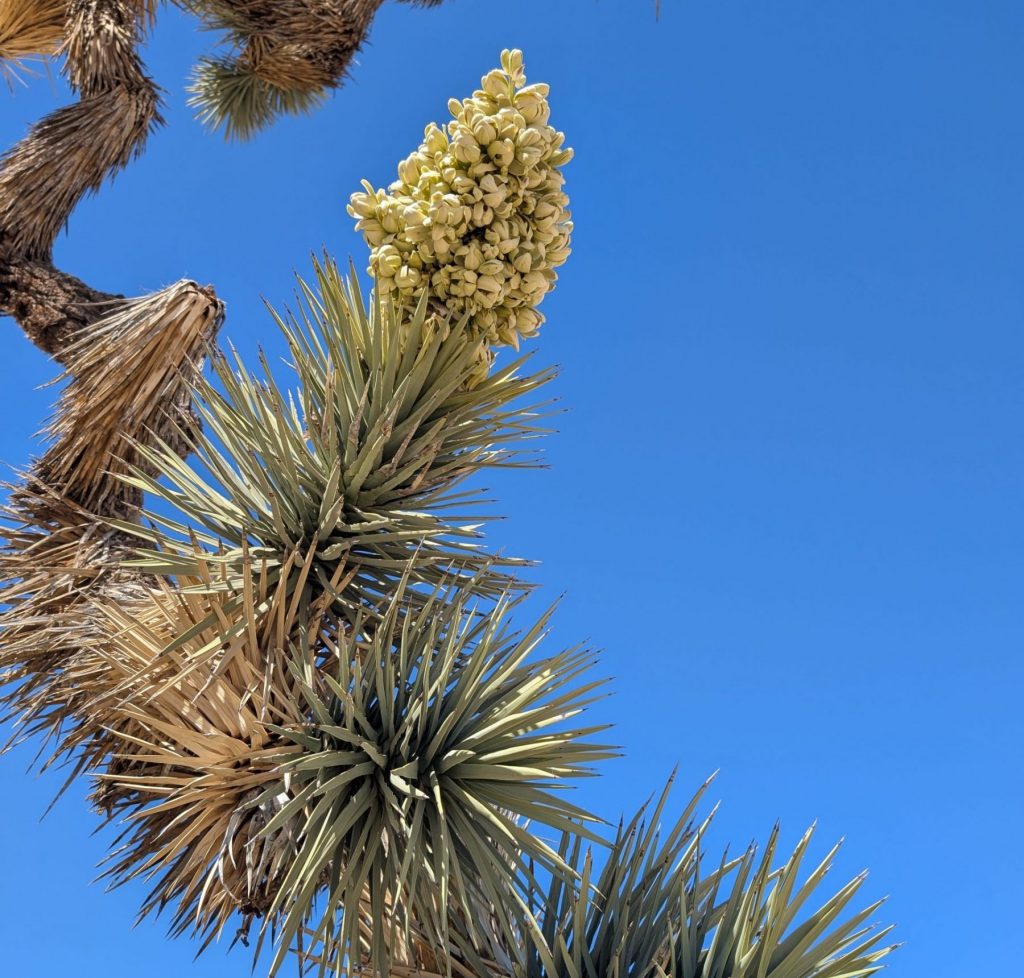
Joshua trees are an iconic symbol of the Mojave Desert in the Southwestern US. Members of the genus Yucca, Joshua tree is composed of two separate species: Y. brevifolia (Western Joshua Tree) and Y. jaegeriana (Eastern). Both species face multiple threats to their survival, including rising temperatures and increasing drought intensity due to climate change, urban sprawl, wildfires, and even the development of climate change mitigation measures, like solar energy arrays.
To better understand how these species will fare in the future, we established three common gardens in the Mojave Desert, populated with seedlings from across the ranges of both species. In a preliminary study, we discovered that Joshua Tree uses low levels of CAM photosynthesis. We are currently working on understanding the extent of local adaptation versus phenotypic plasticity in CAM and other physiological traits, measured across multiple years in the same three common gardens.
Climate change is increasing temperatures, but an overlooked aspect of rising temperatures is that they are also rising at night. Higher nighttime temperatures can lead to increased stress in plants resulting in suboptimal growth. Using seedlings in growth chambers we are assessing responses to nocturnal heating with both physiology and genomics.
This work was started via a collaborative, NSF-funded project (award #2001190 to UConn, Willamette University, Cal State University Northridge, University of Alabama, and the USGS).
Evolutionary framework for CAM photosynthesis
CAM has evolved at least 60 times independently across the vascular plant phylogeny and is thought to be a classic case of convergent evolution. The carbon concentrating of mechanism of CAM is thought to have evolved to minimize photorespiration, whereby Rubisco fixes O2 and plants expend energy to mitigate the toxic byproducts of this process. Photorespiration increases under high temperature conditions (due to changes in Rubisco’s specificity of O2 over CO2) and under low CO2 conditions, which can be brought on by drought stress or other environmental characteristics (e.g., aquatic ecosystems). Many extant CAM lineages on earth are estimated to have evolved after the steep decline of atmospheric CO2 concentrations in the Oligocene. Finally, the evolution of CAM is likely occurring through re-wiring of existing gene networks, all of which already exist in C3 species in different metabolic contexts.
Ongoing work in the lab seeks to test fundamental assumptions about CAM evolution. Specifically, we are interested in whether and to what extent photorespiration is actually reduced in CAM taxa. We are also interrogating whether CAM evolves via the recruitment of the same genes in each origin, and are studying the variation in how CAM is regulated across diverse lineages. Finally, our work also focuses on the diversity of CAM phenotypes, notably C3+CAM species that can use both pathways and that are in some ways emblematic of the initial evolutionary changes that may have been acquired by C3 ancestors as they evolved CAM.